The Next Decade of Educational Innovation
What will education look like in 2035? From neural interfaces to quantum computing in classrooms, the next decade promises unprecedented technological advancement in learning.
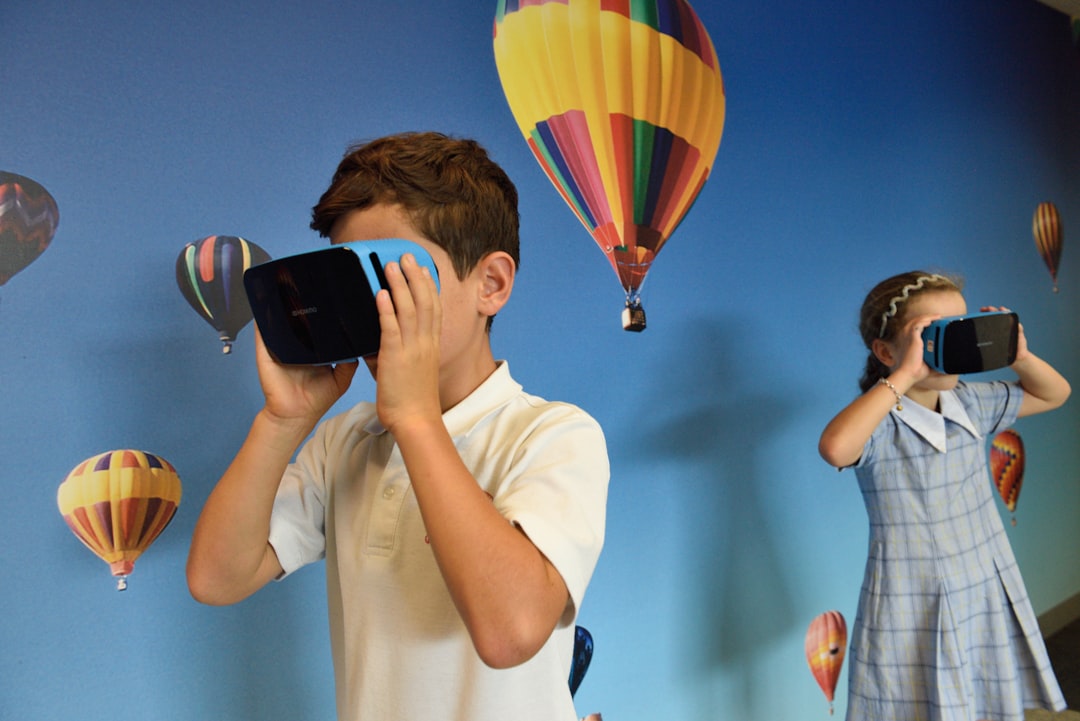
Envisioning Education in 2035
As we stand at the threshold of a new era in educational technology, it's worth considering how dramatically learning will transform over the next decade. The convergence of artificial intelligence, neuroscience, biotechnology, and quantum computing promises to revolutionize not just how we teach, but our fundamental understanding of how humans learn and develop cognitive abilities.
Today's emerging technologies that seem experimental will become mainstream educational tools by 2035. Students will routinely use brain-computer interfaces to enhance focus and memory consolidation. Quantum computers will solve complex problems in seconds that would take classical computers millennia. Personalized learning will reach unprecedented sophistication, with AI tutors that understand each student's cognitive profile at a neural level.
Neural Interface Technology in Education
Brain-computer interfaces are transitioning from medical applications to consumer technology. Within the next decade, non-invasive neural interfaces will allow direct monitoring of cognitive states during learning. These devices will detect when students are confused, distracted, or deeply engaged, enabling educational systems to respond in real-time to cognitive states rather than merely to observable behaviors.
Beyond passive monitoring, neural interfaces will enable new forms of learning enhancement. Targeted neurostimulation can improve attention, consolidate memories, or facilitate pattern recognition. Students might use neural training programs to develop specific cognitive skills with unprecedented efficiency. While ethical questions about cognitive enhancement will require careful consideration, the potential to help struggling learners or unlock hidden potential is immense.
Neural interfaces will also enable entirely new communication modalities. Thought-to-text systems will allow students to compose essays or answer questions by thinking rather than typing. Direct brain-to-brain communication could enable forms of collaborative learning where students share not just ideas but actual perceptual and conceptual experiences. These developments will fundamentally alter what it means to teach and learn.
Quantum Computing's Educational Impact
Quantum computers will transform education in multiple ways. Their immense computational power will enable simulation of complex systems that are currently intractable—protein folding, climate models, economic systems, or social dynamics. Students will experiment with these simulations, developing intuition about complex phenomena through direct interaction.
Quantum machine learning algorithms will analyze educational data with unprecedented sophistication, identifying subtle patterns in how different students learn and predicting with high accuracy which instructional approaches will be most effective for each individual. This quantum-enhanced personalization will make today's adaptive learning systems seem crude by comparison.
Perhaps most significantly, quantum computing will necessitate new forms of literacy and cognitive skills. Students will need to understand quantum principles to work with these systems effectively. Quantum thinking—embracing superposition, entanglement, and probabilistic reasoning—will become as fundamental to education as mathematical literacy is today.
Artificial Intelligence Evolution
While AI is already transforming education, the next decade will see capabilities that dwarf current systems. Artificial general intelligence—machines with human-level reasoning across all domains—may emerge, creating AI tutors truly capable of understanding students at a deep level. These systems will engage in open-ended conversation, answer unexpected questions, provide emotional support, and adapt teaching strategies with creativity rivaling human educators.
AI will become increasingly multimodal, processing visual, auditory, textual, and sensor data simultaneously to understand learning contexts holistically. An AI tutor might analyze a student's facial expressions, tone of voice, body language, work quality, and historical performance data to assess their current state and needs, then generate personalized content, explanations, and activities in response.
The role of human teachers will continue evolving. Rather than being replaced, educators will work alongside increasingly capable AI partners, focusing on aspects of teaching that require human judgment, empathy, and cultural understanding while AI handles routine instruction, assessment, and administrative tasks. This human-AI collaboration will enable more effective education than either could provide alone.
Biotechnology and Cognitive Enhancement
Advances in biotechnology will offer new approaches to enhancing learning. Pharmaceuticals designed to improve memory, attention, or processing speed may become commonplace, raising profound ethical questions about fairness, long-term effects, and the definition of natural cognitive abilities. Genetic understanding of learning differences will enable more targeted interventions for students with specific challenges.
Neuroscience will reveal the biological mechanisms underlying learning at unprecedented detail. Real-time brain imaging will show exactly which neural circuits activate during different learning activities, allowing fine-tuning of instructional approaches to optimize neural pathway development. Understanding the biological basis of memory consolidation will inform scheduling of learning sessions and sleep to maximize retention.
These biological insights will also personalize education at a fundamental level. Genetic factors influencing learning styles, optimal study times, or susceptibility to particular teaching methods will inform individualized educational plans. While concerns about genetic determinism must be addressed, this biological personalization promises to help each student learn in ways that work with rather than against their inherent cognitive architecture.
Extended Reality Ecosystems
By 2035, the boundaries between physical and digital learning environments will dissolve. Mixed reality systems will seamlessly blend virtual elements into physical spaces, allowing students to interact with holographic visualizations, virtual objects, and remote participants as naturally as with physical materials and classmates. These persistent mixed-reality environments will maintain continuity across learning sessions and locations.
Haptic technology will advance to provide realistic touch feedback for virtual objects, enabling hands-on learning experiences with digital simulations that feel physically real. Students will practice surgical techniques on virtual patients that feel like real tissue, manipulate hazardous chemicals that behave authentically but safely, or explore alien environments with realistic sensory feedback.
Spatial computing will enable computational resources to be accessed anywhere in physical space through augmented reality interfaces. Information, tools, and learning resources will appear where and when needed, eliminating the distinction between computer-based and physical learning activities. This ubiquitous computing will support learning throughout daily life rather than confining it to specific locations or times.
Blockchain and Decentralized Learning
Blockchain technology will transform educational credentialing and learning pathways. Traditional degrees may be supplemented or replaced by verified skill credentials and micro-certifications recorded on immutable blockchains. Students will build personalized educational portfolios documenting specific competencies from diverse sources, creating more granular and authentic representations of their capabilities than traditional transcripts provide.
Decentralized learning platforms will enable peer-to-peer education at scale, with blockchain-based systems managing verification, payment, and reputation without centralized authority. Expert knowledge will become more accessible as individuals worldwide can offer and monetize their expertise directly. This democratization of educational resources will challenge traditional institutional models.
Smart contracts will automate educational administration, handling enrollment, payment, credential verification, and completion tracking without human intervention. This automation will reduce costs and increase accessibility while creating transparent, auditable records of educational achievements that follow learners throughout their lives.
Globalization and Cultural Integration
Real-time language translation approaching human quality will eliminate language barriers in education. Students will collaborate with peers worldwide without language limitations, accessing educational resources in any language through seamless translation. This linguistic accessibility will accelerate knowledge exchange and expose learners to diverse perspectives and cultural contexts.
Virtual exchange programs will become standard, with students regularly participating in classes, projects, and cultural experiences with partners from different countries. These interactions will foster global awareness and cross-cultural competencies essential in an interconnected world. Education will increasingly emphasize global challenges—climate change, resource management, international cooperation—that require collective solutions.
Cultural preservation and indigenous knowledge will be documented and shared through immersive technologies, ensuring that traditional wisdom and minority perspectives enrich mainstream education. Students will learn from diverse knowledge traditions, developing appreciation for multiple ways of understanding and interacting with the world.
Adaptive and Lifelong Learning
The accelerating pace of change will make lifelong learning necessity rather than option. Educational systems will shift from focusing primarily on youth to supporting learning across the entire lifespan. Micro-credentials, just-in-time training, and career transitions will become normal as individuals regularly update skills and knowledge throughout their working lives.
AI-powered career guidance systems will analyze job market trends, individual aptitudes, and personal interests to recommend learning pathways that prepare students for emerging opportunities. These systems will help individuals navigate increasingly complex career landscapes where traditional occupational categories blur and new roles emerge regularly.
Educational institutions will transform into lifelong learning partners, maintaining relationships with learners throughout their lives and providing ongoing support, resources, and credentialing. The concept of graduation will become less final, replaced by continuous engagement with learning communities and educational resources.
Ethical and Social Challenges
These technological advances raise profound ethical questions. How do we ensure equitable access to expensive educational technologies, preventing a future where only wealthy students benefit from cognitive enhancement, neural interfaces, or advanced AI tutors? What privacy protections are appropriate when educational systems collect detailed neural, genetic, and behavioral data? How do we prevent algorithmic bias from perpetuating or amplifying educational inequalities?
The possibility of cognitive enhancement forces us to consider what constitutes fair competition in educational contexts. If some students use neural stimulation or pharmaceutical enhancement, does this create pressure for others to do likewise? How do we balance individual autonomy with concerns about coercion and long-term health effects? What happens to concepts of merit and achievement when enhancement technologies alter natural abilities?
Social cohesion becomes a concern as personalized learning potentially fragments shared educational experiences. If every student follows a unique learning path, will they develop the common knowledge base and shared reference points that bind communities? How do we preserve the social functions of education—building relationships, developing collaborative skills, fostering civic values—in increasingly individualized learning environments?
Preparing for an Uncertain Future
While we can identify emerging trends, the future always holds surprises. Unexpected breakthroughs, societal shifts, or global challenges may alter education's trajectory in unpredictable ways. The COVID-19 pandemic demonstrated how quickly educational systems can be forced to transform when circumstances demand it.
Rather than preparing for a specific future, education must cultivate adaptability, critical thinking, and learning how to learn. Students need metacognitive skills to manage their own learning, evaluate information critically, and adapt to novel situations. These capabilities will remain valuable regardless of what specific technologies or challenges emerge.
Emotional intelligence, creativity, ethical reasoning, and interpersonal skills will become increasingly important as automation handles routine cognitive tasks. Education must emphasize distinctively human capabilities that complement rather than compete with artificial intelligence. The goal is preparing learners who can work effectively with advanced technologies while maintaining the wisdom, judgment, and values that only humans can provide.
Conclusion
The next decade promises educational transformation as profound as any in human history. Neural interfaces, quantum computing, advanced AI, biotechnology, and extended reality will create learning experiences barely imaginable today. These technologies offer tremendous potential to make education more effective, accessible, and personalized.
Yet technology alone doesn't determine educational outcomes. Human choices about how we develop and deploy these tools will shape whether they enhance or undermine learning, expand or restrict access, and liberate or constrain human potential. At Hyperlane Education, we're committed to pioneering these technologies thoughtfully, keeping pedagogical goals and human flourishing at the center of innovation. The future we're building is not just more technologically advanced but more human-centered, equitable, and effective at helping every learner reach their potential.